Understanding Utilization and Occupancy Analysis
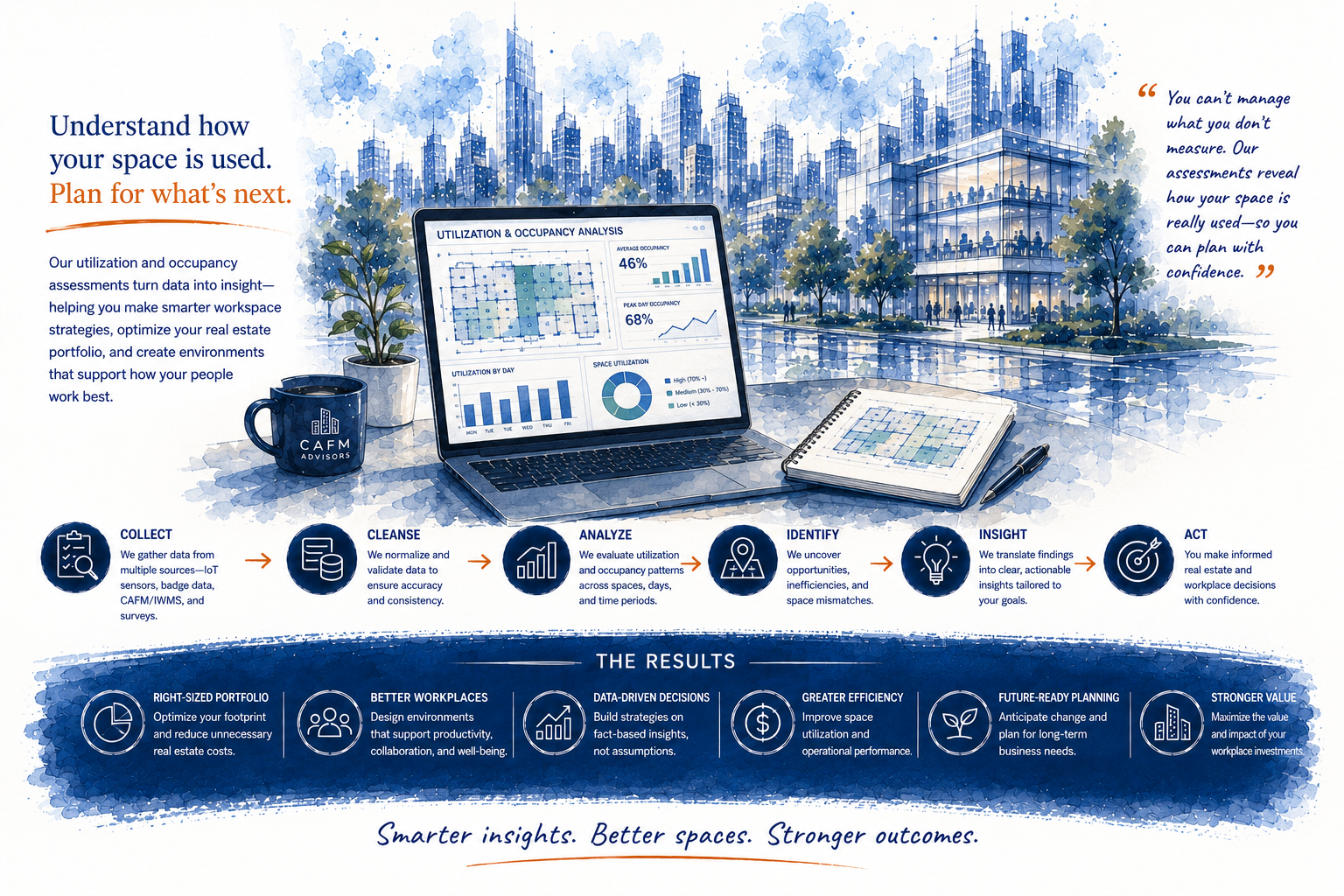
Utilization and Occupancy Analysis provides organizations with a clear understanding of how workplace space is actually being used. While occupancy data measures who is assigned to a space, utilization analysis focuses on how frequently and effectively that space is used over time. Together, these metrics help organizations move beyond assumptions and make decisions based on measurable workplace activity.
Many organizations struggle with underutilized offices, meeting rooms, collaboration spaces, and support areas without realizing the true extent of the issue. By analyzing occupancy assignments, badge data, sensor information, reservations, and CAFM/IWMS records, organizations can identify patterns, uncover inefficiencies, and better understand how employees interact with the workplace. This visibility helps facility and real estate teams optimize space allocation, improve workplace experiences, and reduce unnecessary costs.
As hybrid work models continue to reshape workplace strategies, utilization and occupancy data have become increasingly important for planning and decision-making. Organizations need reliable information to determine future space requirements, support portfolio optimization efforts, evaluate consolidation opportunities, and ensure that facilities align with evolving business needs. Accurate analysis provides leadership teams with the confidence to make informed real estate and workplace decisions.
Ultimately, utilization and occupancy analysis transforms workplace data into actionable insight. Rather than simply tracking where people are assigned, organizations gain a deeper understanding of how their facilities support productivity, collaboration, and operational goals. The result is a more efficient, adaptable, and strategically aligned workplace environment.