CAFM & CAD: The Foundation of Modern Facility Management
Understanding CAFM & CAD in Modern Facility Management
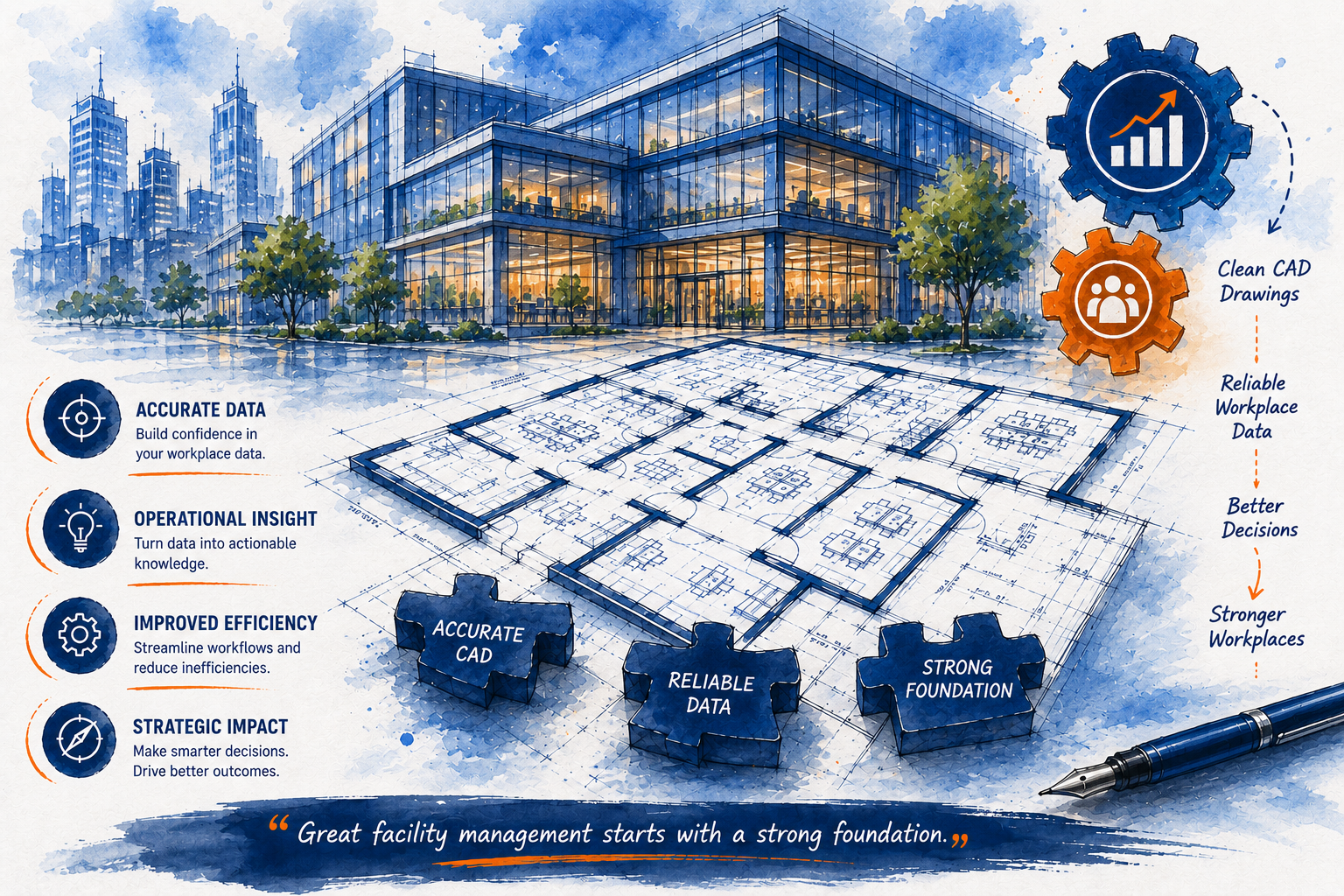
CAFM (Computer-Aided Facility Management) and CAD (Computer-Aided Design) work together as foundational technologies that support modern facility management, workplace operations, and real estate decision-making. While CAD is responsible for the creation and management of accurate digital floor plans and building drawings, CAFM systems use that information to manage occupancy, space utilization, assets, maintenance operations, and workplace data across an organization. Together, CAFM and CAD provide organizations with the operational visibility needed to effectively manage the physical environment that supports their business.
CAD as the Spatial Foundation of CAFM
CAD serves as the visual and spatial foundation of a CAFM environment. Accurate CAD drawings define the physical structure of buildings, including walls, rooms, departments, circulation areas, assets, and lease boundaries. These drawings are often enhanced through standardized layers, polylines, and data structures that allow CAFM systems to calculate areas, track occupancy, and support operational reporting. Without properly maintained CAD standards and governance practices, organizations frequently encounter inaccurate space calculations, inconsistent reporting, integration failures, and long-term data integrity issues.
Transforming Workplace Data into Operational Intelligence
CAFM systems build upon this spatial foundation by transforming drawings and workplace data into actionable operational intelligence. Organizations use CAFM platforms to manage space allocations, employee occupancy, maintenance activities, moves, utilization analysis, lease administration, emergency planning, and reporting. A well-managed CAFM environment creates a centralized source of truth that helps facility teams, corporate real estate groups, and leadership teams make informed decisions regarding workplace operations, portfolio management, and long-term planning.
The Growing Importance of Reliable Workplace Data
As organizations continue adapting to hybrid work environments, rising operational costs, and changing workplace strategies, the importance of reliable CAFM and CAD data has increased significantly. Businesses are under growing pressure to optimize space usage, improve reporting accuracy, reduce inefficiencies, and better understand how facilities support organizational goals. Clean drawings, governed data structures, and reliable CAFM workflows are essential for maintaining operational clarity and ensuring confidence in workplace reporting and analytics.
CAFM & CAD as Strategic Operational Infrastructure
Ultimately, CAFM and CAD should be viewed as far more than technical support systems. Together, they form the operational framework that allows organizations to understand, manage, and optimize the built environment. When implemented and maintained effectively, CAFM and CAD provide the foundation for smarter facility management, improved workplace strategy, and more informed business decision-making.